
Application background
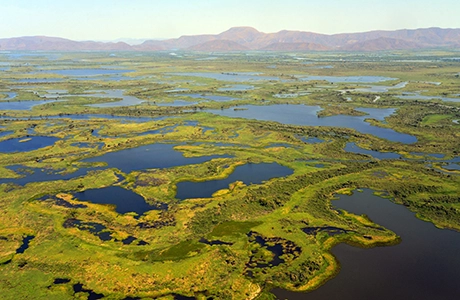
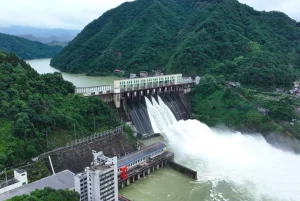
Against the backdrop of the intensification of global climate change and the frequent occurrence of extreme weather events, the prevention of floods and droughts, the conservation and utilization of water resources, and the protection and restoration of the water ecosystem have become major challenges for national and regional development. China has numerous rivers and lakes, and water condition monitoring is the cornerstone of water resources management, disaster prevention and mitigation, project scheduling, and ecological protection. However, traditional hydrological monitoring methods face many bottlenecks:
-
Insufficient site coverage:A large number of small and medium-sized rivers, remote mountainous areas, wetlands and lakes lack effective monitoring, resulting in data blind spots.
-
Limited energy supply:Field sites often face problems such as difficult access to mains power, high cabling costs, and poor stability.
-
Challenges of data accuracy and reliability:Traditional contact sensors are vulnerable to the influence of silt, aquatic organisms, freezing, and floating debris in floods. They require frequent maintenance and are prone to failure under extreme conditions.
-
The level of intelligence needs to be improved.:Traditional site data is collected at a low frequency and transmitted with a delay, making it difficult to meet the modern requirements of real-time early warning, precise scheduling, and smart water conservancy.
At the same time, the country vigorously promotes the construction of smart water conservancy, builds a smart water conservancy system with functions of "forecast, early warning, pre - simulation, and pre - plan", and for hydrological monitoringReal-time performance, accuracy, reliability, and full-domain coverage capabilitiesPut forward unprecedented high requirements.
Applicable to a variety of measurement conditions
- Unaffected by corrosion and foam
- It can output the measurement data of flow velocity, water level and flow rate.
- Low power consumption and high precision
- High stability, unattended operation
It can be applied in a wide range and is non-contact measurement.
Application cases

The vanguard of disaster prevention and mitigation: The crucial role of the solar-powered IoT monitoring system in flash flood and engineering safety early warning
This article focuses on the core challenges of water conservancy safety - mountain flood geological disasters and the safety of water conservancy projects. It elaborates on how the solar - powered IoT monitoring system, leveraging its advantages of being free from power grid limitations, having reliable......
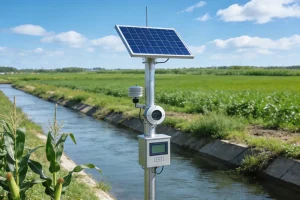
From "Fuzzy Experience" to "Data - Driven": How the Solar - powered IoT System Empowers Precise Water Resource Scheduling and Decision - making
This article focuses on the core decision - making process in water resource management, and explores how to use the real - time, continuous, and multi - dimensional big data provided by the solar - powered Internet of Things monitoring system to drive the shift from "empirical judgment" to "model optimization" in aspects such as water......
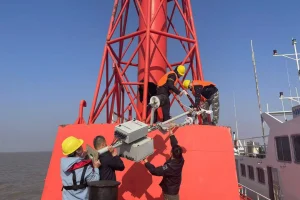
The "Unattended" Revolution of Smart Water Conservancy: How the Solar-powered IoT Monitoring System Reconstructs the Hydrological Monitoring Network
This article deeply analyzes the core pain points of the traditional hydrological monitoring mode in terms of human reliance, data blind spots, and response delays. It systematically expounds on how the solar-powered IoT monitoring system achieves unmanned intelligent monitoring of the entire basin, all elements, and around the clock ......